Is IV Therapy Safe? An Honest Answer
Yes — when given by a trained registered nurse with real medical oversight. Here is what that means and how we keep our clients safe.
First-Timers, You Are In Good Hands
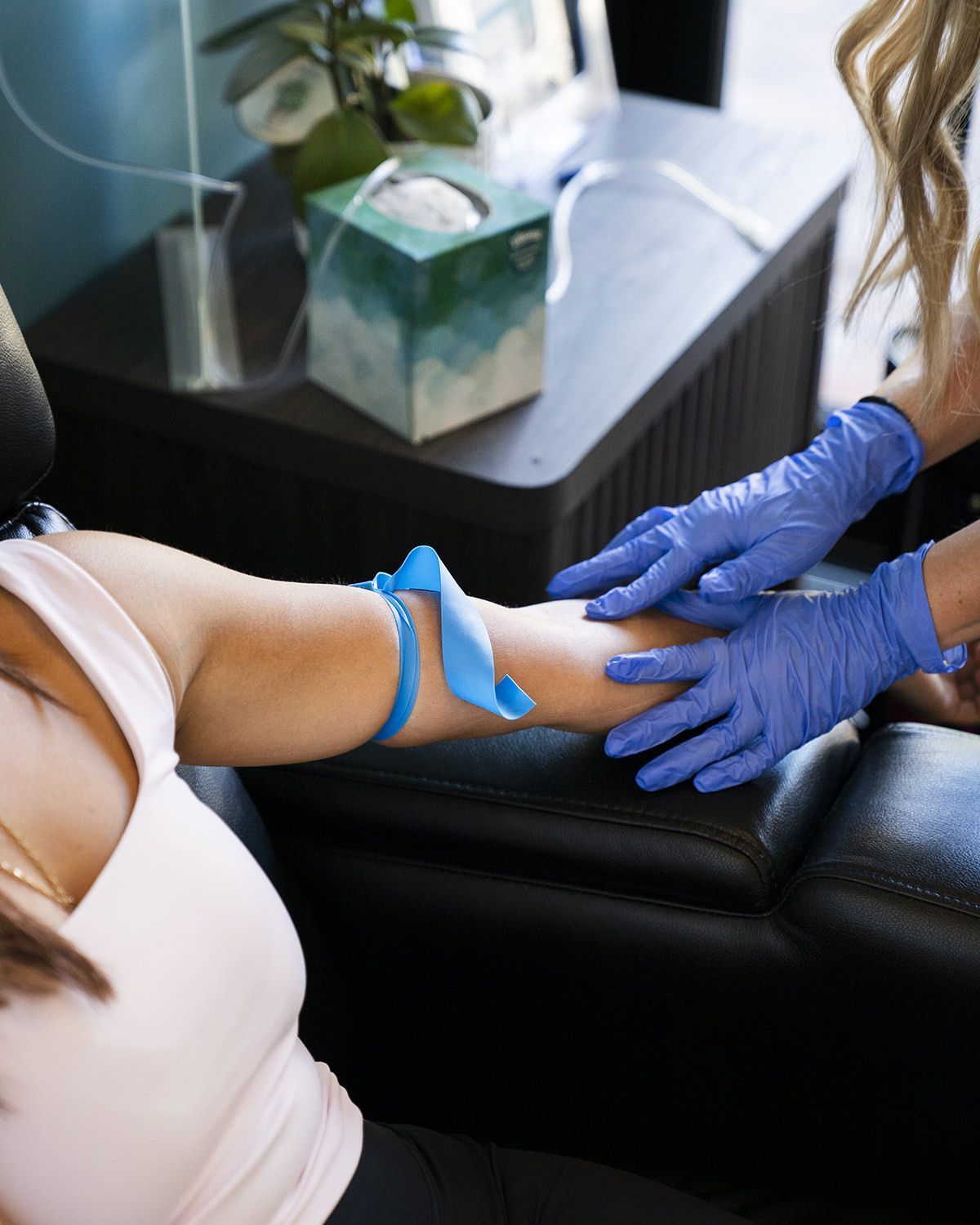
Most people who try IV therapy for the first time say one thing afterward. That was way easier than I expected. The whole appointment runs about 60 minutes. Setup takes 5. Insertion takes 30 seconds. The drip itself is gentle. And the difference you feel is real.
This guide walks through everything you should know before your first appointment. Pick your IV. Get cleared. Get the drip. Feel different. That is the whole thing.
Yes, With the Right Provider
IV therapy has a strong safety record when it is done right. The needle insertion is a quick pinch. The supplies are sterile. The ingredients are pharmaceutical grade. Most clients have no side effects beyond a small bruise at the IV site or a vitamin taste during the drip.
The risk in this category is not the IV itself. The risk is who is giving it. Mobile IV companies that cut corners by using under-trained staff, skipping medical oversight, or pushing high doses without screening have caused real problems for clients. That is why the difference between providers matters so much.
RN every visit. Medical Director every protocol. That is our standard. We do not cut corners on the medical side, ever.
The Four Things That Matter
Trained Provider
Every IV should be given by a licensed registered nurse, not a tech or medical assistant. RNs have years of clinical training and know what to do if anything unusual happens during the drip.
Real Medical Oversight
A licensed medical director should review every protocol and approve every drip. This is the line between real medical care and a wellness gimmick.
Sterile, Single-Use Supplies
Every needle, line, and bag should be brand new and sealed in sterile packaging. We use pharmaceutical-grade supplies from FDA-registered facilities.
Pre-IV Screening
A Good Faith Exam screens for any conditions or medications that would make an IV unsafe for you. It is a short consult and Arizona requires it before any IV therapy.
What Could Go Wrong
The honest list of possible IV therapy risks is short, but worth knowing.
Common, Mild, Easily Handled
- Bruising at the IV site. Most common. Goes away in a few days.
- Vein irritation. Sometimes the vein gets tender. Goes away in a day or two.
- Cool sensation as fluid moves in. Normal. Passes quickly.
- Vitamin taste in your mouth from B-complex. Normal. Passes quickly.
Less Common
- Infection at the IV site. Rare with sterile technique. Watch for redness, swelling, or warmth that does not pass.
- Allergic reaction to an ingredient. Rare. Your nurse stays with you the whole drip and watches for any signs.
- Vein irritation that lasts longer. Sometimes a vein is harder to use for the next few days.
Rare, Serious
- Air embolism. Extremely rare with proper technique. Trained RNs prevent this.
- Vein damage from poor needle placement. Rare with trained providers.
- Reactions to high doses of certain ingredients. We screen for risk factors before any high-dose IV.
If anything feels off during your drip, your nurse stops the IV right away. We never push through a reaction.
Times to Get Medical Clearance
Some conditions and situations need extra screening before any IV. Our Good Faith Exam catches most of these, but you should also tell your provider if any of the following apply to you.
- You are pregnant or trying to become pregnant. We require OB approval before any IV during pregnancy.
- You have a serious heart condition or kidney condition.
- You take blood thinners.
- You have a known allergy to vitamins, medications, or IV ingredients.
- You have G6PD deficiency. This affects high-dose vitamin C IVs.
- You have a history of fainting during medical procedures.
- You have any chronic medical condition you have not discussed with our Medical Director.
In all of these cases, we work with your provider first. We do not rush an IV through screening.

Our Safety Process
Step 1
Good Faith Exam
Every first-time client completes a short consult with our Medical Director or a contracted provider. We screen for any reason an IV would not be safe for you.
Step 2
RN-Led Service
Every IV is given by a licensed registered nurse with real clinical experience. No techs, no medical assistants, no shortcuts.
Step 3
Sterile, Single-Use Supplies
Every needle, line, and bag is sterile, sealed, and single-use. Pharmaceutical grade. FDA-registered facilities.
Step 4
On-Site Monitoring
Your nurse stays with you the entire drip. They check on you, monitor for any reactions, and stop the IV right away if anything feels off.
How to Spot a Provider That Cuts Corners
If you are choosing between IV therapy providers, here are some things to ask. The right answers tell you a lot about who you are dealing with.
- Who gives the IV? It should be an RN. If they say tech or medical assistant, that is a red flag.
- Is there a Medical Director? Real providers have one. Sketchy ones do not.
- Do you do a Good Faith Exam? Required by Arizona. If they skip it, that is a serious red flag.
- What if I have a reaction? A trained RN handles reactions safely. Make sure they have one on every visit.
- Where do your supplies come from? Pharmaceutical grade and FDA-registered facilities are the standard.
Cheap IVs are not always safer. Sometimes they are cheaper because the provider cut corners on the safety side. Choose carefully.
Safety Questions, Answered
Has anyone ever had a serious reaction during a Good Life IV drip?
Serious reactions are extremely rare in our service. Our Good Faith Exam screens out most risks before the IV starts. Our nurses are trained to stop the drip right away if anything feels off. We have a strong safety record because we never skip steps.
Can I be allergic to an IV?
Yes, in rare cases. Some people are allergic to specific vitamins, minerals, or medications used in IVs. Our Good Faith Exam asks about allergies. Your nurse also asks before starting the drip. If you have ever had a reaction to an IV ingredient before, tell us.
What happens if a vein is hard to access?
Sometimes veins are harder to find than others. Dehydration, cold weather, and small veins all play a role. Our nurses are trained in tough access and will try a different vein if needed. We never force a vein.
Are mobile IVs as safe as clinic IVs?
Yes, when the provider is qualified. The supplies, the technique, and the protocols are the same. The setting is just more comfortable. We use the same standards in your home as we do in our Biltmore studio.
Can children get IV therapy?
We treat adults and teens 16 and older. For children under 16, we refer to a pediatric IV provider. Pediatric IV therapy needs different training and dose calculations.
Are high-dose IVs more risky?
Higher doses come with more screening. Our high-dose Vitamin C IV (25g and above) requires a G6PD blood test. Our NAD+ protocols are reviewed and approved for each client. Higher dose, higher screening — every time.
Can I get an IV if I am sick?
Mild illness is usually fine. We sometimes recommend an IV during a cold to support your body. But if you have a fever, severe symptoms, or anything that needs medical attention, see a doctor first. The IV is not a substitute for medical care.
Where can I find more about your safety standards?
Our About page covers our 25+ year heritage in patient care. Our Good Faith Exam process and Pre-IV Screening pages cover the screening side in more detail. Reach out if you have questions we have not answered here.
Real Care. Real Standards. Real Safety.
Book your IV with the team that takes safety as seriously as we take wellness. RN every visit. Medical Director every protocol.